 EN
 AR
 BG
 HR
 CS
 DA
 NL
 FI
 FR
 DE
 EL
 HI
 IT
 JA
 KO
 NO
 PL
 PT
 RO
 RU
 ES
 SV
 TL
 ID
 LV
 SR
 SK
 SL
 UK
 VI
 SQ
 HU
 TH
 TR
 AF
 MS
 GA
 CY
 BE
 LA

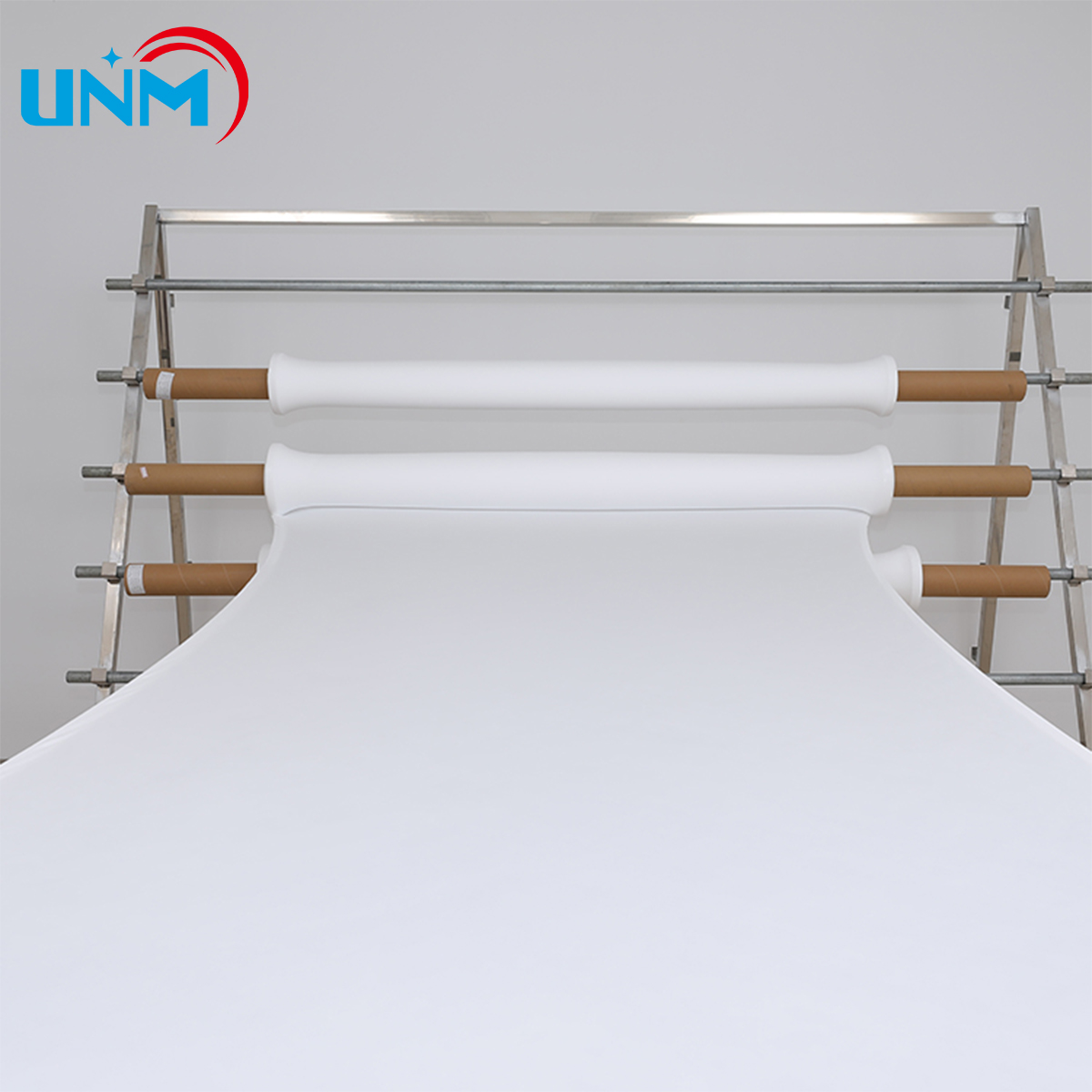
When buyers ask for a “0.22 μm ePTFE membrane,” they usually mean one thing: sterilizing-grade retention. But 0.22 μm is a nominal rating, not a guarantee. Two membranes can both be labeled 0.22 μm and behave very differently under a bacterial challenge. The difference is pore-size distribution—and the bubble point is how you verify it.
What “Sterilizing-Grade” Actually Requires
The accepted benchmark is retention of Brevundimonas diminuta at a challenge of >10⁷ CFU per cm² of filter area. A membrane passes only if its largest pores are small enough to block the organism—not if its average pore size looks right on paper.
That is why bubble-point testing matters. Bubble point correlates with the largest pore in the wetted membrane. A tight distribution gives a stable, repeatable bubble point; a broad distribution gives a low or erratic one, even when the mean pore size is on spec.
UNM PM022S: Published Parameters
UNM’s PM022 grade is a 0.22 μm ePTFE membrane specified for sterilizing-grade liquid filtration:
|
Parameter |
PM022S |
|
Pore size |
0.22 μm |
|
Bubble point |
0.13–0.19 MPa |
|
Air permeability |
15–25 L/m²/s @500 Pa |
|
Flow speed |
≤8 s @0.093 MPa |
|
Surface |
Hydrophobic / hydrophilic options |
|
Certification |
SGS, RoHS |
|
MOQ |
200 m² |
|
Lead time |
7–15 days |
Note: these are membrane-level test values. In-service flux depends on the full filter train, fluid properties, operating pressure, and cleaning regime—not the membrane alone.
Three Things to Check Before You Specify
Ask for batch-level bubble-point data, not a single certificate of analysis. Consistency across lots is the real indicator of process control.
Match surface chemistry to the fluid. Native ePTFE is hydrophobic; aqueous streams need a hydrophilic grade or pre-wetting.
Confirm the retention test method your quality team will use—bubble point, diffusion, or a full bacterial challenge—before locking the specification.
Why ePTFE for Sterilizing Duty
ePTFE’s node-and-fibril structure supports surface filtration: particles are captured at the membrane interface rather than embedded deep in the pore network, so flow resistance rises more slowly and cleaning intervals lengthen. Combined with PTFE’s chemical inertness and a service range up to 260°C, it handles aggressive chemistries and repeated sterilization cycles that degrade PES or nylon membranes.
Next Step
If you are qualifying a 0.22 μm membrane for a sterile process, start with the bubble-point specification and the surface chemistry—then request a sample against your actual fluid.
UNM supplies ePTFE membranes from 0.1 μm to 7 μm, with SGS/RoHS documentation and 200 m² MOQ.
? www.unmptfe.com — request PM022 data and samples via the contact form.